The Airport Test: When a Legal Cannabis Prescription Meets UK Security
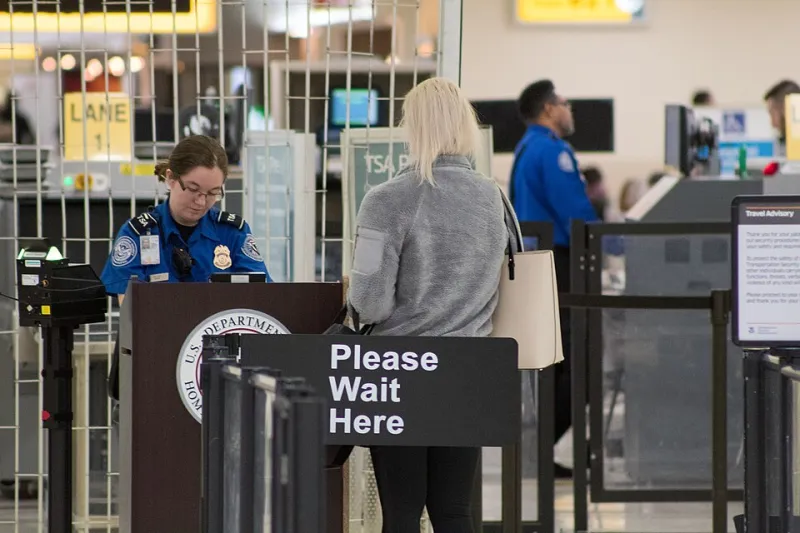
Photo: Michael Ball, CC0, via Wikimedia Commons
Medical cannabis has been legal on prescription in the UK since 2018. Yet the airport remains one of the few places where a patient can feel the old prohibition logic snap back into place. You are not smuggling anything. You have a clinic letter, a pharmacy label and a legally prescribed Schedule 2 controlled drug. But you are also standing in a security queue with a bag that might be about to be opened in public, and a nagging thought: what if the person on the scanner has never seen one of these before?
That gap — between what the law says and what the process feels like — is the whole story of flying with medical cannabis in 2026. This is journalism, not legal advice, and policies shift. But if you are flying from a UK airport with prescribed cannabis, here is the lay of the land.
The law is not the problem. The process is.
On domestic UK flights, a prescribed cannabis-based product for medicinal use is not automatically contraband. The key word is prescribed. That means original pharmacy packaging, a dispensing label with your name on it, and a quantity that matches your prescription. A clinic letter helps. A copy of the prescription helps more. Loose flower in a grinder, a vape cart with no label, or a friend’s bottle of oil does not help at all.
Airport security is not customs and it is not a court. It is a screening operation with a legal duty to look for prohibited items. Medical cannabis can look, to an untrained eye, like something that should not be there. Most airports have a process for private screening of medicines. Most staff have probably seen it before. But most is not all, and that is where the friction lives.
What security actually sees
Put yourself behind the scanner for a moment. Organic plant matter. A bottle of oil. A battery-powered vape. Possibly syringes if you use them. None of that is unusual in a carry-on, but it is unusual enough to prompt a second look. The smart move is not to hide it at the bottom of your bag and hope. Keep your medicine in your cabin baggage, in its original packaging, and tell the security officer at the tray that you are carrying prescribed medical cannabis and would prefer a private search.
You do not have to announce it to the whole queue. You do have to be clear. Ask for a private screening area. Ask for a supervisor if the first officer seems unsure. Do not get into a legal debate at the belt. The aim is not to win the argument; the aim is to get to the gate with your medicine intact.
Airport by airport: patient-reported notes
There is no single UK airport policy on medical cannabis. There is a patchwork of training, local practice and staff confidence. The notes below are patient-reported patterns, not official guidance, and they can change by terminal, shift and season.
- Heathrow: Busiest, most procedure-heavy, most likely to have a private search room. Terminal matters. Allow extra time and keep your clinic letter accessible rather than buried in a suitcase.
- Gatwick: Patients often report a smooth process when they ask for private screening early. North and South terminals can feel different. Do not assume one experience predicts the other.
- Manchester: Generally familiar with prescribed medicines, but peak queues can rush the interaction. Slow it down. Ask for the private area.
- Stansted: Security is brisk and volume-heavy. Patients report mixed experiences. Arrive early and have documentation in one folder.
- Birmingham: Smaller and often calmer, but staff may need to call a supervisor. That is normal. Build in time for it.
- Edinburgh: Often described as reasonable and discreet, but still variable. Do not rely on a good story from a friend in 2024.
- Bristol: Smaller airport, variable familiarity. The process may be fine; the waiting while someone checks may not be.
The pattern is consistent: documentation, early declaration and a request for privacy tend to help. Shouting about legality at the tray tends not to.
The airline is a separate country
Security gets you airside. The airline gets you airborne. They are not the same thing. Airline policies on medical cannabis are inconsistent, and call centre staff do not always agree with gate staff. Some carriers have clear medical notification processes. Some have website pages that are vague or out of date. Some staff will be completely fine; others will look at you as if you have asked to bring a lit joint into the cockpit.
If you need to notify the airline, do it in writing and keep the reply. If you are told one thing on the phone and another at the gate, ask for a supervisor. Do not dose heavily before boarding if it leaves you impaired; airlines can refuse boarding on impairment grounds, and that is a separate issue from legality. Keep vape batteries in cabin baggage and follow the usual lithium battery rules. Nobody wants a security incident at 30,000 feet over a charging cable.
International is where it gets properly serious
A UK prescription does not travel with you like a passport. If you are flying from the UK to another country, the destination’s law applies. Some countries are relaxed about prescribed cannabis. Some treat any cannabis product as illegal, prescription or not. Some are ambiguous in ways that are deeply unhelpful at customs. Transit countries matter too. Do not assume that because Heathrow security let you through, Amsterdam or Dubai or New York will be fine with it.
Check the destination embassy, the airline and the customs rules before you book. If you are returning to the UK with a controlled medicine, check the current gov.uk guidance; some controlled drugs require a personal licence to bring into the UK. If in doubt, leave it at home. A legal prescription is not a global travel pass.
The confiscation risk is real, but it is not random
Patients do report delays and, occasionally, confiscation. The common threads are usually avoidable: medicine out of its original packaging, a label that does not match the patient, a quantity that looks commercial rather than personal, or a patient who panics and says the wrong thing. Security may call the police. The police may verify the prescription. That can end with an apology and a delayed flight, or with a very long morning. It is rarely smooth when the paperwork is messy.
Carry the original packaging. Carry a recent clinic letter. Carry a copy of your prescription and a pharmacy contact number. Carry only what you are prescribed. Do not carry a friend’s oil as a favour. Do not carry loose joints in a smell-proof bag and call it medicine. The law may be on your side, but the process rewards clarity.
A practical pre-flight checklist
- Keep medical cannabis in your cabin baggage, not checked luggage.
- Keep it in original pharmacy packaging with your name and dose visible.
- Carry a clinic letter, a copy of your prescription and a pharmacy contact.
- Declare it at security and ask for a private screening area.
- Arrive early. Build in an extra hour for the conversation you should not need.
- Check your airline’s medical notification policy in writing.
- Check the destination country’s rules before you book, not at the gate.
- Do not travel with more than your prescribed amount.
- If you are unsure about the destination, leave the medicine at home.
The airport is a strange test of how normal medical cannabis has become in Britain. In 2026, it is more normal than it was. But normal is not uniform. The law may say one thing; the scanner, the airline and the customs officer may say another. The trick is to make your paperwork do the talking, keep your cool, and remember that legal does not always mean smooth at 30,000 feet.