Plot Twist: The Allotment Hemp Dream Is Not a Legal Loophole
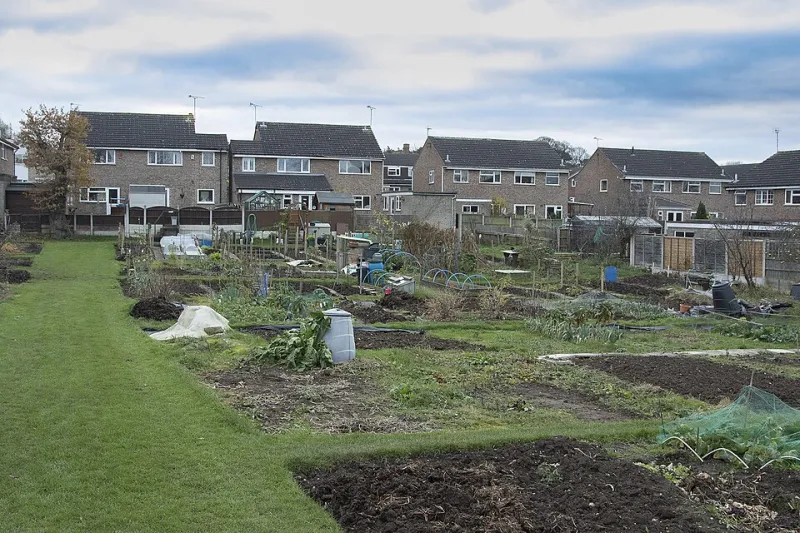
Photo: Malcolm Neal , CC BY-SA 2.0, via Wikimedia Commons
On a damp Sunday in October, the allotment fantasy writes itself: a neat half-plot, a shed with a kettle, runner beans climbing cane, and a few rows of hemp swaying at the back. It feels wholesome, slightly rebellious and very British. As of November 2026, that fantasy runs into a wall of licensing, tenancy agreements and policing. The allotment hemp “loophole” is not a loophole. It is a misunderstanding with consequences.
Hemp is still cannabis in the eyes of the law
Start with the label. Industrial hemp is Cannabis sativa with low THC, but UK drug law does not wave it through because it sounds wholesome. The cannabis plant is controlled under the Misuse of Drugs Act 1971. Growing it for fibre, seed or other industrial purposes requires a Home Office licence, and that licence is granted to a named person or organisation for a specific site. It is not a general permission for allotment holders, and it is not a route to personal CBD flower.
Licences come with conditions: approved varieties, security, record-keeping, THC monitoring and destruction rules. The Home Office can consult police and local authorities. A plot the size of a garden shed is not the natural home for that regime. More importantly, a licence for industrial hemp is not a licence to extract CBD at home or sell flowers to a wellness shop.
What the tenancy actually permits
Allotments are governed by a patchwork: the Allotments Act 1922 and later legislation, council rules, parish council rules, private site rules and the tenancy agreement itself. Most tenancies are for horticulture and personal use. They often ban commercial activity, require written consent for structures or changes of use, and prohibit subletting. Some councils explicitly restrict what can be grown; others rely on broad “no nuisance” clauses.
Allotment associations and licensing solicitors tend to give the same answer: even if a crop were theoretically lawful under a national licence, the plot-holder would still need the landlord’s consent. A tenancy committee can say no. A council can say no. A neighbour can complain. The licence does not override the lease.
The licensing reality: site, security and testing
A Home Office hemp licence is site-specific and purpose-specific. It is not designed for a scatter of small plots. The police need to know where the crop is; the site needs to be secure; the plants need to be traced. Allotment sites are open, shared and often overlooked by houses. That is a recipe for reports of “cannabis growing on the allotments”, even when the THC is low.
Testing is another issue. Low THC is not “no THC”. The legal limit for industrial hemp is tight, and crops can drift. A grower who thinks they are cultivating a compliant fibre variety may still end up with plants that fail a test. In a commercial field, that is a compliance problem. On an allotment, it can become a criminal investigation, a tenancy termination and a story in the local paper.
Why the loophole framing is dangerous
The internet loves a loophole. “Grow hemp on your allotment” sounds like a cheeky workaround for people who want CBD without the shop markup. But the framing encourages exactly the wrong behaviour: buying seeds online, planting a few rows, telling yourself it is industrial hemp, and hoping nobody asks questions.
That is not a legal strategy. It is a fast route to a police visit, a destroyed crop and a damaged tenancy. It also puts allotment neighbours in an awkward position. They may support cannabis reform, but they did not sign up to a licensing experiment next to their potatoes.
CBD hemp versus cannabis: the market blur
The market blur makes this worse. CBD products are legal in the UK if they meet food and safety rules, including novel food requirements, and if they contain no controlled cannabinoids above the permitted levels. But “CBD hemp” is not a magic phrase that changes the plant’s legal status. Hemp flower for smoking or extraction is a different conversation from hemp seed oil or fibre.
Consumers should also be sceptical of anyone selling “allotment-grown UK hemp flower” as a legal workaround. The compliance questions are not decorative. They involve licensing, testing, premises, traceability and advertising rules. A garden plot does not answer any of them.
If you are serious, what lawful routes look like
If you genuinely want to grow hemp, the lawful route is not a secret allotment patch. It is a conversation with the Home Office licensing team, a landlord or landowner, an agronomist and, ideally, a solicitor. Commercial hemp is a farming and compliance project, not a hobby with a cheeky edge.
For allotment holders, the practical advice is simpler. Read your tenancy. Ask your council or site association before you plant anything unusual. Do not assume that a low-THC seed packet makes you legal. And do not treat a gardening forum as legal advice.
The bottom line
Allotments are one of Britain’s great countercultural spaces: stubborn, sociable, slightly chaotic and fiercely local. Hemp could be part of that story in the right legal setting. But the idea that a garden plot offers a quiet bypass around UK drug law is not just wrong. It is the kind of wrong that costs people their plot, their crop and possibly their clean record.