The Last Unclaimed Course: CBD, the Carvery and the Sunday Roast Holdout
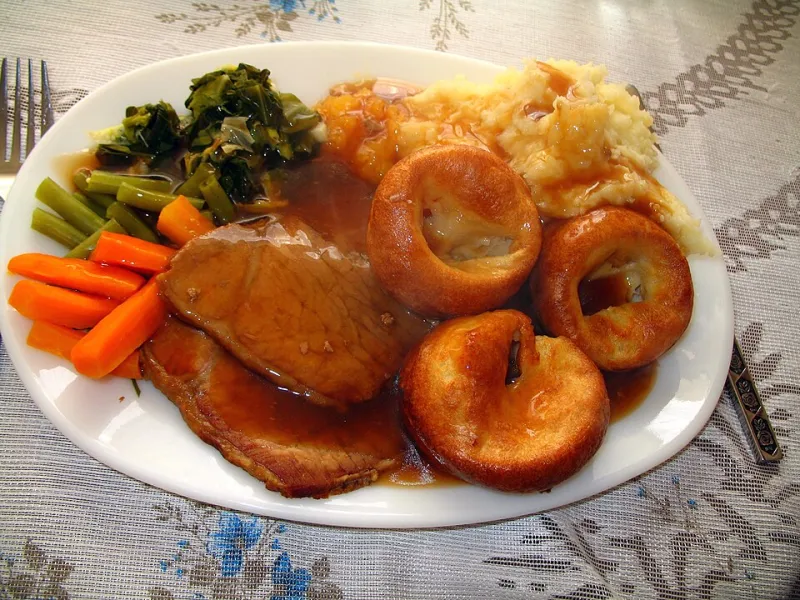
Photo: by robbie jim, CC BY 2.0, via Wikimedia Commons
There is a particular kind of British optimism that looks at a sacred institution and thinks: what if we added a wellness ingredient? It has happened to coffee, to soft drinks, to chocolate and, more recently, to the gym bag. But the Sunday roast has held the line. As of 2026, you can find CBD in a cold brew, a bath bomb or a tincture beside the toothbrush, yet the chances of finding it folded into pub gravy or drizzled over a carvery joint remain vanishingly small.
The gap is not because nobody has thought about it. It is because the Sunday roast is a meal with unusually high cultural stakes and unusually low tolerance for fuss. CBD may be sold as relaxation in a bottle, but a roast dinner is already the relaxation. Adding cannabidiol to it risks looking less like innovation and more like someone tampering with the national mood.
The gravy problem is not really about gravy
On paper, CBD gravy sounds straightforward. On a plate, it is a texture and flavour problem with a regulatory tail. CBD extracts carry an earthy, sometimes bitter note, and gravy is a difficult place to hide anything. A dark onion gravy can carry a little; a light chicken jus cannot. Yorkshire puddings are worse: they rely on a hot oven, a precise batter and a rise that does not appreciate improvisation. Nobody wants a pudding that tastes of hemp and collapses like a failed soufflé.
Then there is dosing. A roast is a shared meal, often eaten by people who have not opted into a CBD product. A tincture comes with a dropper and a label. A jug of gravy comes with a ladle and a queue. The pub has to think about consistency, staff training and what happens when someone asks how much CBD is in their third helping. Those are not impossible questions, but they are questions that a Sunday carvery — high volume, fast turnover, tight margins — is not naturally built to answer.
Novel food, pub kitchens and the paper trail
The bigger obstacle is legal. In the UK, CBD used as a food ingredient is treated as a novel food. That means it needs authorisation before it can be legally sold as food, and the route is not a quick one. A pub cannot simply buy a bottle of CBD oil and stir it into the gravy, then wait to see how Sunday goes. Food businesses need to be able to show that what they are selling is compliant, correctly labelled and safe. Local authorities and trading standards take an interest in that paper trail.
For a small independent pub, the appeal of a CBD Sunday roast is obvious: a point of difference, a story for social media, a way to compete with the chain down the road. But the cost and complexity of getting it right are less obvious. For a large pub company, the risk is different but no smaller. A single non-compliant menu item can become a brand problem, a labelling problem and a conversation with Environmental Health that nobody wants before the Christmas rush.
That does not mean CBD food is banned. It means the market is narrower than the marketing suggests. Approved, standardised CBD ingredients exist, but they are not as simple as ordering a flavoured syrup. The gap between a CBD drink on a shelf and a CBD roast on a menu is not one product; it is a supply chain.
The economics of a £16 roast
The Sunday roast is a strange economic beast. It is labour-intensive, oven-heavy and often sold at a price that feels high to the customer and thin to the kitchen. Pubs use it to fill quiet Sundays and keep the kitchen ticking over. Adding a costly ingredient to the gravy, the stuffing or the cauliflower cheese changes the maths. If the CBD is undetectable, customers may resent paying more for nothing. If it is detectable, some will send it back.
There is also the question of waste. A batch of CBD gravy cannot be sold indefinitely. It needs labelling, storage and a team that understands what it is handling. A carvery already has enough moving parts. The Yorkshire pudding tray does not need a compliance briefing.
Culture eats wellness for lunch
Perhaps the most underrated barrier is cultural. The British Sunday roast is not a neutral foodstuff. It is a ritual with rules: the right pub, the right pint, the right amount of gravy, the argument about whether cauliflower cheese belongs. It is also a meal that many people associate with family, tradition and a certain suspicion of anything that sounds like a health trend. CBD has spent years trying to shake off the headshop image and move into the mainstream. Putting it in a roast risks dragging it back towards novelty.
That is not to say pubgoers are hostile. They are, by and large, indifferent in a very particular way. They will try a CBD drink if it tastes good and is not priced like a luxury. They will not try a CBD roast if it feels like a gimmick with a side of moral improvement. The Sunday roast is already a treat. It does not want to be a supplement.
What would it take?
The most likely route is not a full CBD roast, but a sidecar. A CBD-infused gravy or condiment served separately, clearly labelled, with a dose that is modest and a taste that does not announce itself. That keeps the roast intact and gives the curious a way in. A few independent pubs might trial it, probably in cities where the wellness crowd and the gastropub crowd overlap. If it works, it will be because the food is good first and the CBD is second.
The other route is the non-alcoholic drinks list. CBD has already made more progress there, and a Sunday lunch with a CBD-infused alcohol-free spritz is a much easier sell than a Yorkshire pudding with a functional twist. Pubs understand drinks. They understand margins on drinks. They understand adults who want something to hold while everyone else has a pint.
For now, the gravy boat remains unclaimed. That may be no bad thing. Britain has absorbed CBD into enough corners of daily life without asking it to save Sunday lunch. The roast has survived wars, recessions and the cauliflower cheese debate. It can survive the wellness industry too — at least until someone works out how to make a compliant, tasty, reasonably priced CBD gravy that does not ruin the pudding. On current evidence, that is a long way off. And the Yorkshire pudding, for one, is relieved.