Dogs, Drops and Doubt: Who's Actually Vetting Britain's CBD Pet Products?
Bonfire season is a hard time to be a spaniel. Every November, my neighbour's cocker takes to the sofa like a soldier in a trench, trembling through every rocket and every loose Catherine wheel. Last year, my neighbour tried everything: a thunder shirt, a plug-in diffuser, a weighted blanket, and, eventually, a small brown bottle ordered from an Instagram ad at eleven o'clock at night. Two drops on a dental chew, she was told, and the dog would be 'calm but not sedated'. She swears it worked. She also has no idea what was in it.
That is the shape of the CBD pet market in Britain right now: a lot of sincere, slightly desperate owners, a lot of confident marketing, and a regulatory framework that was never really built for any of it.
The shelf that keeps growing
Pop into any pet shop or scroll a pet wellness site and you'll find the stuff everywhere — oils, soft chews, 'calming' sprays, even CBD-infused balms for sore paws. The pitch is always the same three notes: hip and joint comfort, fireworks and travel anxiety, and general 'wellness'. It's aimed at the sort of owner who already spends forty quid on a joint supplement and reads the ingredients on a bag of kibble in the aisle.
And to be fair, that owner is not being unreasonable. There's real anecdotal weight behind it. Ask around any dog-walking WhatsApp group and you'll hear the same stories: the rescue that finally settled, the arthritic lurcher that started taking the stairs again. The trouble is that a Facebook group full of hopeful owners is not a clinical trial, no matter how many heart emojis it collects.
What the law actually says
Here's where it gets dry, and where most of the marketing quietly hopes you'll stop reading.
CBD products for humans sit in the novel foods regime, administered by the Food Standards Agency. Any CBD extract sold as a food or supplement needs authorisation — and at the time of writing, that authorisation pipeline remains a slow, sticky business, with products on sale largely on the basis of being on the FSA's public list while assessments grind on.
Pets are a different mess entirely. If a product claims to treat, prevent or manage a condition in an animal, it is edging into veterinary medicine territory, and that is policed by the Veterinary Medicines Directorate. No CBD product is authorised as a veterinary medicine in the UK. Where a vet thinks it's clinically justified, they can prescribe under the cascade — the legal route for using an unauthorised medicine when nothing licensed fits — but that is a considered clinical decision, not a bottle bought at 11pm on a whim.
Meanwhile, pet food and 'complementary feed' claims fall under separate feed rules, and general advertising claims are the Advertising Standards Authority's patch. The net result is a product category that can be sold as something vague, but not as something medicinal — and a lot of brands pushing right up against that line.
The label problem
Most of the confusion isn't legal, though. It's arithmetic.
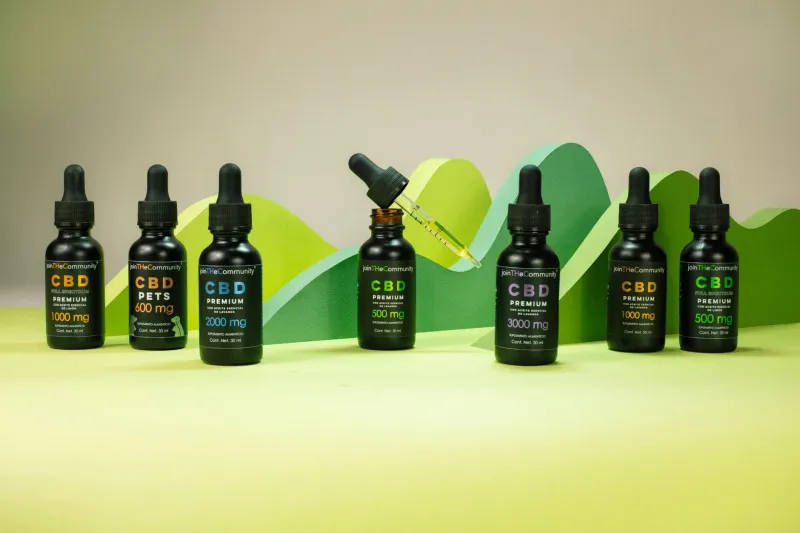
A bottle will say '500mg CBD' in big letters and '30ml' in smaller ones. That tells you how much is in the whole bottle, not how much is in a drop. Owners are then asked to work out, for an animal that weighs anywhere from a chihuahua to a Great Dane, how many milligrams per kilogram of body weight is sensible — a calculation that varies by product, by dog, and by whatever the brand's support inbox reckons that afternoon.
Add in the classic label issues — inconsistent stated content, unclear extraction methods, the age-old gap between what's on the certificate of analysis and what's on the website — and you have a lot of people eyeballing a dropper and hoping. There's no established, universally agreed dosing protocol for CBD in dogs or cats, which is precisely why the responsible answer sounds so annoying: talk to your vet.
Anecdote isn't evidence, but it isn't nothing
None of this means owners are daft or that CBD does nothing. It means we're in the familiar early-stage position: plausible mechanisms, encouraging small studies, plenty of owner testimony, and not nearly enough large, well-controlled trials in companion animals to make firm claims. Veterinary researchers have been calling for exactly that for years.
There's also a genuine safety conversation here that gets drowned out by the marketing. CBD can interact with other drugs, and it's metabolised in ways that mean 'natural' and 'harmless' are emphatically not synonyms. Ask anyone who has had a dog go wobbly after a dose that seemed reasonable.
The convenience blind spot
What worries me most isn't the product itself — it's the frictionless nature of the buying. A vet appointment means a conversation, a weigh-in, a check of medication history. A checkout page means three clicks and a discount code. When the low-friction route is the one with no clinical oversight, you've built a market that rewards confidence over caution.
That's the blind spot: not a shadowy cartel, just a gap between how fast a category can grow and how slowly a rulebook gets rewritten. The rules haven't caught up, and in the meantime, the marketing has raced ahead.
So what does a sensible owner do?
Boring things, mostly. Buy from brands that publish batch-level lab results you can actually read. Be sceptical of anything promising to cure separation anxiety or rebuild a hip. Tell your vet what you're giving, including the dose and the product name, even if you suspect a raised eyebrow. And treat fireworks season the way you'd treat any other health decision for an animal that can't Google things for itself.
Which brings me back to the spaniel. The drops may well have helped. But so did the thunder shirt, the closed curtains, and the fact that someone was sitting with her. CBD is not a shortcut past the work of owning an anxious animal — and Britain's pet shops would do well to stop implying otherwise.