From Evidence Bag to Ash: The Unseen Afterlife of UK Cannabis Seizures

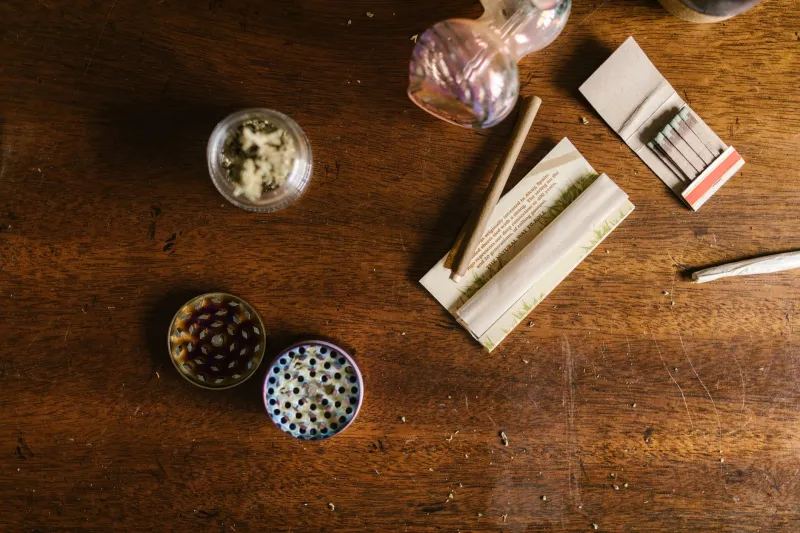
Photo: Achim Raschka (talk), CC BY-SA 4.0, via Wikimedia Commons
There is a moment in every cannabis seizure that never makes the press release. The raid is over, the photos are taken, the exhibit bag is sealed, and a plant that was recently someone’s crop, cargo or medicine becomes a numbered item in a police store. From there, the story gets administrative. It also gets strangely quiet.
We hear plenty about seizures. Police forces publish totals, Border Force announces busts, and the Home Office keeps count in its annual statistics. What we rarely hear is what happens next: where the bags go, who signs them out, and why the final destination for so much confiscated cannabis is a licensed incinerator rather than a compost heap, a research lab or a public conversation.
The bag that goes quiet
In England and Wales, seized cannabis is handled under the general machinery of criminal evidence and controlled drugs law. The Misuse of Drugs Act 1971 makes cannabis a Class B drug. The Police and Criminal Evidence Act 1984, the Criminal Procedure and Investigations Act 1996 and a patchwork of force-level standing orders govern how exhibits are bagged, stored and disclosed. For large hauls, there may be sampling, photography and forensic testing. For smaller street-level seizures, the process can be leaner but still documented.
Then comes the awkward bit: retention. Cannabis is bulky, smelly and not especially pleasant to store. Forces have evidence stores with limited space. Once a case is concluded — or once it is clear that a case will not proceed — the exhibit becomes a disposal problem. The law does not allow police to simply tip it into a bin. Controlled drugs must be destroyed through authorised routes, with records to show that the chain of custody has not snapped.
That is where the destruction certificate enters the story. It is not glamorous. It is often a form, a signature and a reference number. But it is the closest thing to a public trace of what happened to the weed.
Chain of custody, then the furnace
In practice, forces use licensed waste contractors and permitted facilities. Some material goes to high-temperature incinerators. Some may go to energy-from-waste plants, where the plant matter is burned and the heat is used to generate electricity. The exact route depends on the force, the contractor and the size of the seizure. What is consistent is the principle: destruction must be secure, witnessed and documented.
The Environment Agency regulates permitted waste incinerators in England, and equivalent bodies do similar work across the UK. Police forces are not free to improvise. They need authorised carriers, permitted sites and an audit trail. For a Schedule 1 controlled drug like cannabis — the legal category that covers raw cannabis — the paperwork tends to be especially cautious.
Not every gram is burned straight away. Some material is retained for court, sometimes for months or years. Some may be kept for training, forensic reference or, in rare cases, research with the right approvals. But the general direction of travel for seized cannabis is thermal: evidence bag to destruction, destruction to ash.
What actually gets burned
This is where the picture gets less tidy than the word “incineration” suggests. A seizure is not just flower. It can include packaging, vacuum bags, tubs, labels, vape cartridges, edibles and the assorted clutter of the illicit market. Some of that material raises its own waste questions. Incinerating cannabis in a permitted facility with emissions controls is not the same as burning a bin bag in a garden. The temperature, filtration and monitoring matter.
There is also the question of volume. A large border seizure might be sampled, photographed and then destroyed in bulk. A smaller police seizure might sit in an evidence store until a case closes. The result is a system that is legally careful but operationally uneven. There is no single national public ledger that says: this many tonnes were seized, this many were destroyed, this many were retained, and this is where the ash went.
The environmental ledger
On the environmental side, the case for incineration is usually framed around security rather than sustainability. Composting or anaerobic digestion might seem greener for plant matter, but controlled drugs create diversion risks. A facility that turns seized cannabis into compost is a facility that has to guarantee no one can intercept the material. Regulators tend to prefer destruction that is final and hard to reverse.
That does not make the environmental questions disappear. Incineration produces emissions, even with modern controls. Transport adds carbon. Packaging adds waste. And there is a deeper oddity: in 2026, the UK has a legal medical cannabis framework, yet the state simultaneously destroys cannabis as illegal waste. The same plant can be a prescription product in one room and a controlled exhibit in another.
For patients, the disposal advice is different. Unused prescribed cannabis should be returned to a pharmacy for safe destruction rather than flushed, binned or burned at home. The principle is similar — controlled drugs need a controlled ending — but the context is medical rather than criminal.
Medicine, evidence, waste
That contrast is the part that lingers. A legal patient can hold cannabis flower with a prescription, but the illicit market that supplies everyone else is still policed through seizure and destruction. The incinerator is the point where the law’s categories become physical. It does not care whether the plant was grown for medicine, money or a bit of both. It only cares that the paperwork is correct.
There is a cultural cost to that silence, too. Seizure statistics tell us about enforcement. They do not tell us about waste, cost or the environmental footprint of destroying a plant that some people are legally allowed to possess. They do not tell us how often seized cannabis is retained for research, or how many forces have clear public policies on disposal. The public record tends to stop at the arrest because the afterlife of the exhibit is treated as an administrative detail.
Why the public record stops at the arrest
Maybe that is the real story. Britain’s confiscated cannabis does not vanish. It is weighed, bagged, signed for, driven, burned and recorded. But the record is fragmented across forces, contractors and regulators. A national seizure and disposal register would not legalise anything. It would simply make the furnace visible.
Until then, the incinerator keeps its share. The evidence bag goes quiet, the certificate gets filed, and the smoke — filtered, permitted and carefully unromantic — rises from a plant that the UK still cannot decide whether to fear, prescribe or simply let go.