The Little Brown Bag Problem: Collecting Legal Cannabis From the High Street Chemist
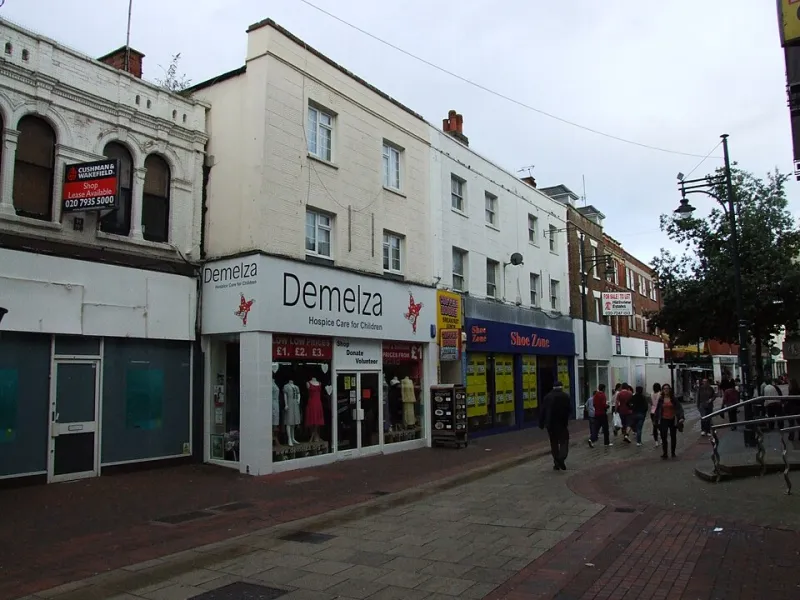
Photo: Chris Whippet , CC BY-SA 2.0, via Wikimedia Commons
Picture the scene. A small-town chemist on a damp Tuesday in November 2026. Flu jabs are being booked by the till, someone is collecting a repeat for blood-pressure tablets, and a child is negotiating for a packet of strawberry laces. Then the pharmacist emerges with a brown paper bag and calls a name. Inside is a legally prescribed cannabis oil, or perhaps a tub of flower, dispensed under a private prescription. Nobody in the queue necessarily knows that. But the patient does. And so, usually, does the person behind the counter.
This is the quiet frontier of UK medical cannabis. For years, the story was dominated by specialist clinics, courier deliveries and the strange administrative theatre of online consultations. In 2026, a growing number of prescriptions are being routed to high-street pharmacies instead. That is, in principle, a good thing: less waiting by the door for a courier, more choice, and a medicine that sits alongside the rest of the health system rather than hovering outside it. In practice, it creates a very British set of awkwardnesses.
The Normalisation Test
A high-street pharmacy is not a cannabis dispensary, and it should not try to be. It is a chemist. That is exactly why the shift matters. When a legal cannabis prescription is handed over beside paracetamol and flu jabs, the medicine is being folded into ordinary life rather than kept in a separate, slightly mysterious lane. For patients who have spent years feeling like they are doing something faintly illicit, that can be genuinely grounding.
But normalisation is not just about access. It is about choreography. Who calls your name? Is there a consultation room, or just a gap between the vitamin shelves and the counter? Does the person serving you know what the prescription is for, or do they simply see a box that has arrived from a specialist importer? Does the queue behind you hear the word “cannabis” and immediately start constructing a story?
In a city pharmacy, anonymity is often possible. In a small-town chemist, it frequently is not. The staff may know your mum. The person behind you may be your neighbour. The prescription may be legal, but the social cost is not evenly distributed.
A Prescription Is Not a Paracetamol
Medical cannabis in the UK is not a standard high-street product. Most prescribed cannabis-based medicines are unlicensed specials, which means they are ordered through specialist importers rather than pulled from the same wholesaler shelf as cough syrup. The pharmacist may have dispensed cannabis oil before. They may not. They may have received extra training through their own company or professional network. They may also be encountering a particular product, strength or flower batch for the first time.
That is not an argument against high-street dispensing. Community pharmacists are highly trained medicines experts, and the General Pharmaceutical Council expects them to work within their competence. But cannabis is still a niche area, and competence is not the same as familiarity. A pharmacist can be perfectly capable of checking a prescription and still not be the best person to answer a patient’s questions about vapour temperature, oil absorption or what to do if a batch looks different from last time.
Some pharmacies have built proper pathways: named staff, private consultations, clear expectations about ordering times and a direct line to the prescribing clinic. Others are learning on the job. Patients can usually tell the difference within about thirty seconds.
The Stock Gap
The high street runs on the expectation of immediate gratification. You hand over a script, or it arrives electronically, and you walk out with something. Medical cannabis rarely works like that. Products may need to be ordered in. Certain oils, strengths or flower varieties can be out of stock. Import timelines are not the same as domestic wholesale timelines. A pharmacy that promises same-day collection without checking the supply chain is setting everyone up for disappointment.
For patients, the gap between prescription and collection can feel like a test of patience. For pharmacists, it can feel like being asked to perform a magic trick with a medicine that arrives in its own time. The sensible move is usually to ring ahead, confirm stock, and ask how the pharmacy prefers to handle cannabis prescriptions. That is not the patient’s job in an ideal world, but in 2026 it is often the difference between a smooth collection and a wasted trip.
The Queue Is the Consultation Room
Privacy is the issue nobody puts on the poster. A legal cannabis prescription is a private medical matter, but high-street pharmacies are not always designed for privacy. Some have consultation rooms. Some have a quiet corner. Some have a queue that can hear a pin drop and a pharmacist with a carrying voice.
Patients should not have to explain their medicine to a captive audience. Nor should they have to feel grateful for basic discretion. Good practice looks unglamorous: lower voices, neutral language, private spaces where available, and staff who understand that a brown paper bag is not a cloak of invisibility. It also means not treating cannabis as a novelty. A prescription is a prescription. The fact that it is cannabis makes it legally interesting and socially loaded, but it does not make it a spectator sport.
What Good Looks Like
The best high-street dispensing experiences tend to share a few features. The pharmacy knows the prescription is coming. Someone has checked the product and the paperwork. There is a private or semi-private space to talk. The patient is given clear advice about storage, dosing and what to do if something seems wrong. And there is no performance of surprise at the counter.
Patients can help themselves by asking direct questions: Is this stocked, or ordered in? Who will I speak to? Can we do this away from the main queue? What is the process if the product is delayed? Those questions are not demands. They are basic consumer and patient literacy.
Counter Culture
The high-street pharmacy is becoming one of the most ordinary places in Britain to encounter legal cannabis. That is a cultural shift worth noticing. It is also a practical one. The little brown bag is not the problem. The problem is pretending that the setting does not matter. A chemist is a place of medicine, gossip, queues and fluorescent lighting. Cannabis is now part of that picture. The task for 2026 is to make sure privacy and competence keep pace with the prescription pad.