Nobody's Testing the Sunday League — So Why Is Cannabis Still a Changing-Room Secret?

Photo by Photo by martin fenton on Unsplash on Unsplash
There is a particular kind of silence in a Sunday league changing room when someone mentions cannabis. It is not the loud, tabloid silence of a scandal. It is the quiet shuffle of lads suddenly very interested in their boot laces. A joke gets made. Someone says they “know a guy.” Then the conversation moves on to who is bringing the balls.
That silence matters, because the official rules and the clubhouse reality are not the same thing. At elite level, anti-doping is a visible machine: whereabouts apps, testers at training, provisional suspensions, press releases. At grassroots level, it is mostly a PDF on a governing body’s website and a half-remembered warning from a coach. Yet cannabis still gets managed — informally, unevenly and sometimes unfairly — by club culture rather than by any formal policy.
The whistle nobody hears
Let’s be clear about the starting point. UK Anti-Doping operates the national anti-doping framework, and the World Anti-Doping Agency’s prohibited list applies across signatory sports. THC — the main psychoactive compound in cannabis — is banned in-competition. CBD is not on the prohibited list. That distinction sounds simple. In practice, it is where a lot of grassroots athletes get lost.
A Sunday league footballer is not likely to see a doping control officer at a muddy pitch in February. Amateur rugby and running clubs are not routinely swabbed after every fixture. But “rare” is not the same as “impossible,” and the rules do not magically stop applying because the post-match food is a bag of crisps. National governing bodies can have their own policies, and testing can reach beyond the televised end of sport. The safe assumption for any athlete — even a recreational one — is that the anti-doping code is the code, not a vibe.
The bigger issue is that most grassroots clubs have no clear way to talk about it. So the rules get enforced by rumour. A player with a medical cannabis prescription becomes “the stoner.” A runner using a CBD balm gets side-eyed in the car park. A rugby player who uses cannabis to manage sleep is treated as a liability rather than an adult with a body and a prescription.
Where the rules actually live
In practice, the anti-doping rulebook lives in three places: the governing body’s website, the UKAD education materials, and the head of whoever happens to be club secretary that season. That is not a robust system.
Grassroots sport runs on volunteers. Coaches are often parents, ex-players or people who stepped up because nobody else would. They are not expected to be anti-doping lawyers. But that means the conversation about cannabis is usually absent until there is a problem — a selector’s suspicion, a parent’s complaint, a clubhouse argument that spills into a group chat.
And because there is no shared script, club culture fills the gap. Some clubs are relaxed. Some are quietly zero-tolerance. Some will ignore cannabis use until a player has a bad game, at which point it becomes a character issue. That is not policy. It is vibes with a whistle.
Prescription isn’t a hall pass
This is the part that catches people out. A legal UK prescription for medical cannabis does not automatically exempt an athlete from anti-doping rules. THC remains prohibited in-competition, and athletes who use prescribed cannabis need to understand whether they require a Therapeutic Use Exemption, or TUE, under their sport’s rules. UKAD’s guidance is the place to start, and it is worth checking directly rather than relying on what a mate heard in the pub in 2019.
That can feel absurd to anyone who uses prescribed cannabis for chronic pain, anxiety, sleep or other conditions. The prescription is legal. The product is regulated. The athlete is not trying to cheat. But anti-doping is a separate legal universe with its own paperwork, and “I have a prescription” is not always the full answer.
For grassroots athletes, the practical question is not usually “will I be tested after Sunday’s match?” It is “what happens if this becomes a club issue?” A player might be asked to explain medication to a coach who has no training in medical confidentiality. A committee might panic. A teammate might make assumptions. The TUE question is important, but so is the human question: who gets to know, and why?
CBD, recovery and the label problem
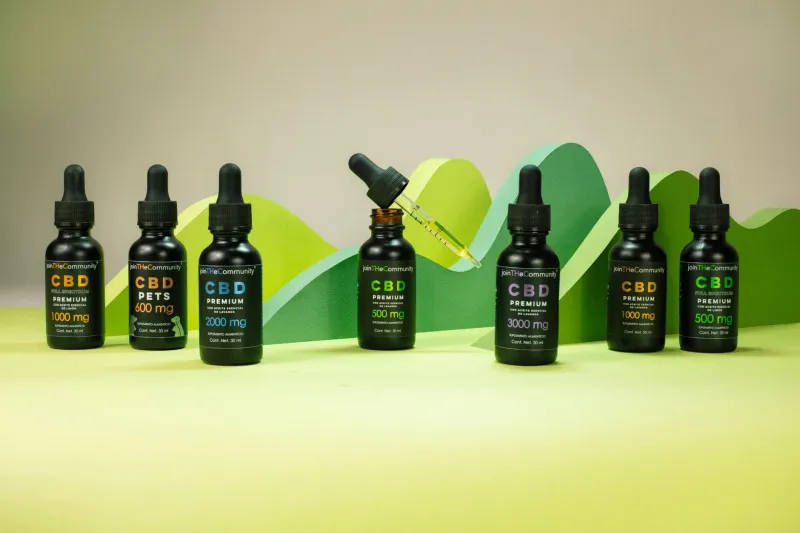
CBD is not prohibited. That has made it the unofficial recovery product of British sport, from running clubs to gym bags to the glove compartment of a car that smells faintly of deep heat. But CBD products are not all created equal, and the UK market still has a labelling problem.
Athletes who use CBD should care about contamination. A product marketed as CBD can contain trace THC, and trace THC is still THC when it comes to anti-doping. This is not about scaremongering every high-street tincture. It is about being realistic: the CBD shelf is not a pharmacy shelf, and batch testing matters.
For grassroots athletes, the sensible move is boring. Look for clear third-party lab results. Avoid products that make wild claims. Keep receipts. If you are subject to anti-doping rules, check the product against current guidance and speak to UKAD or your governing body if you are unsure. “It’s only CBD” is a reasonable sentence in a clubhouse. It is not a legal defence.
The club tribunal
Here is the uncomfortable truth: most grassroots cannabis policing is not about doping at all. It is about conduct, reputation and the strange moral economy of amateur sport. A player who drinks eight pints after a match is “one of the lads.” A player who uses cannabis to sleep is “a risk.” A runner who takes CBD for sore knees is sensible. A rugby player who admits to using cannabis recreationally is a problem.
The inconsistency is the point. Without clear policies, clubs default to culture. And culture is not neutral. It carries class assumptions, generational gaps and a lot of outdated drug-war instinct. The result is that some athletes hide legal prescriptions. Others avoid CBD because they are worried about a test that will probably never happen. And clubs miss the chance to give people straightforward, accurate information.
What to do before the next match
If you are a grassroots athlete who uses cannabis or CBD, the first step is to stop treating the rules as something that only applies to Olympians. Check your sport’s anti-doping policy. Check UKAD’s current guidance on THC, CBD and TUEs. If you have a prescription, ask your clinic and your governing body what documentation you need. If you use CBD, buy from brands that publish batch-level lab results and understand that “THC-free” is a claim, not a guarantee.
If you run a club, the first step is simpler: talk about it. Not in a finger-wagging way. In a “here is the rule, here is the form, here is who to ask” way. Grassroots sport is built on volunteers and trust. It should not be built on rumour.
Because nobody is testing the Sunday league every week. But the changing-room tribunal is always in session.