The Balm Before the Scab: CBD and the Tattoo Studio Aftercare Boom
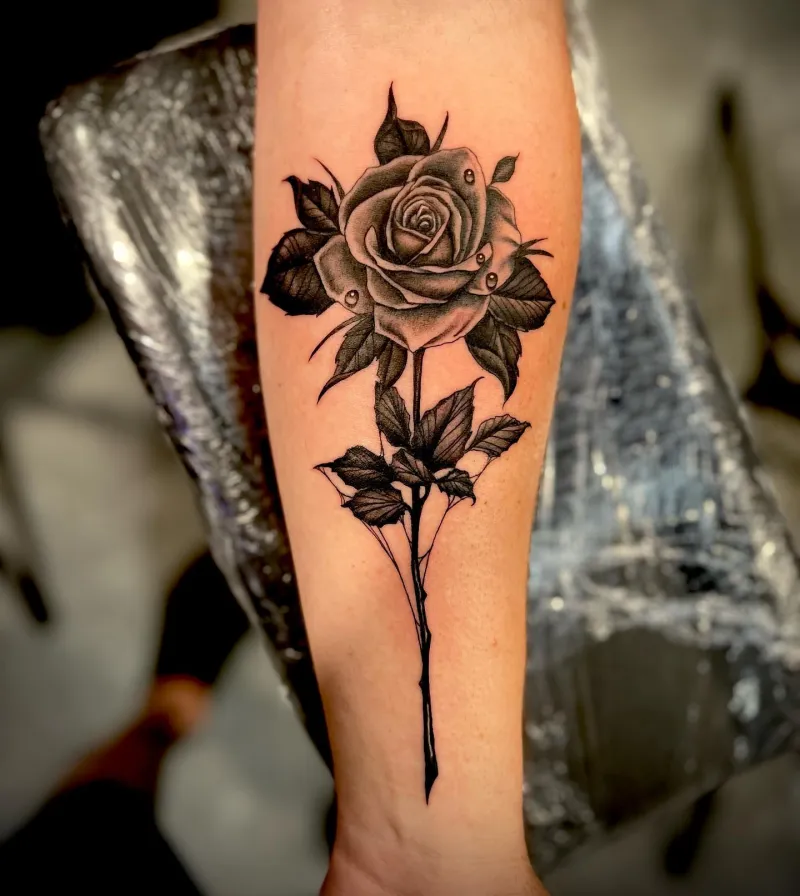
Photo: tattoo studio aftercare balm tin counter artist UK, via alexie.co
There is a particular smell to a good tattoo studio: green soap, latex, and the faint antiseptic tang of a surface that has just been wiped down. Increasingly there is a fourth note, and it comes from a small tin by the card reader.
CBD aftercare has become the quiet upsell of the British tattoo trade. Balms, scar gels, 'healing butters', roll-ons and foaming washes, all carrying a hemp leaf and a paragraph about inflammation. Most studios are not making a fortune from them. They stock them because clients ask, because a supplier turned up with samples, or because the artist genuinely likes the texture.
That is a fairly reasonable set of reasons to have something on a shelf. It is not, however, a reason to believe the claims on the tin.
What the shelf is actually selling
Read the labels closely and you notice three things. First, the ingredient list is usually dominated by the carriers — shea, coconut oil, sunflower, calendula, sometimes a little beeswax. Second, the CBD content is often stated as milligrams per tub rather than per application, which makes a 200mg balm sound impressive until you work out that a fingertip's worth contains roughly none of it. Third, the strongest words on the packaging tend to be about 'soothing' and 'calming', while phrases like 'reduces scarring' and 'prevents infection' appear in the shop's Instagram caption rather than on the product itself.
That distinction matters more than most people realise. 'Reduces scarring' is a medicinal claim. Put it on packaging and you have arguably created an unauthorised medicine.
The evidence is thinner than the tin suggests
CBD has genuine anti-inflammatory interest in laboratory work and animal models. What it does not have is a body of human trials showing that a topical balm speeds tattoo healing or improves final line quality.
Dr Priya Nair, a dermatologist who has spent a decade fielding aftercare questions, is careful with her words. 'A fresh tattoo is a wound,' she says. 'The principles are boring and well-established. Keep it clean, keep it thin, keep it simple. There is no convincing human evidence that adding a cannabinoid to that routine improves anything, and there is a plausible risk of irritation at exactly the wrong moment.'
That last point is the one artists tend to overlook. CBD is not inert on skin. The compound can be a sensitiser for some people, and a fragrance-laden balm applied to a wound that is still weeping is a decent recipe for contact dermatitis. If your new tattoo gets red, hot and itchy at 72 hours, you will not know whether that is the ink, the balm or the bug you picked up on the bus.
Cosmetic, medicine, or wishful thinking
Topical CBD sits in the cosmetics regime, which means it should have a UK Responsible Person, a safety assessment on file, correct INCI labelling and no medicinal claims attached to it. None of that is exotic — it is the baseline for any hand cream.
What you sometimes find instead is a beautiful website, a lab report from 2022 that tests for cannabinoid content rather than microbiological safety, and a request that you 'do your own research'. The Food Standards Agency's novel food rules, which do apply to ingested CBD, do not apply to balms, so there is no regulated gatekeeper at the point of sale. A tattoo chair with a card reader is now, functionally, a distribution channel.
What artists will tell you off the record
Most artists are more pragmatic than their shop's merchandise suggests. The good ones recommend a thin layer of petroleum-based ointment or a plain unscented moisturiser, a fragrance-free wash twice a day, and a strict hands-off policy for the first week. Several told me they stock CBD balm because clients arrive already convinced, and arguing with a paying customer about their own skin is a losing game.
One artist in Bristol put it well: 'I am not a pharmacist and I am not pretending to be. If someone brings in a balm their mate swore by, I will say patch test it. That is it. That is the advice.'
That is also, frankly, quite good advice.
Before you put it on fresh ink
- Patch test on healed skin first, ideally 24 hours ahead, on the inside of the forearm.
- Wait for the wound to close before applying anything not recommended by your artist. A fresh tattoo is not skin care; it is wound care.
- Check the INCI list for fragrance, essential oils and 'parfum' — the usual suspects in contact reactions.
- Ignore the milligram headline and look at what percentage of the formula is actually cannabinoid.
- Treat scarring claims as a red flag, not a selling point. If it promises to prevent scars, the words are aimed at the ASA and not at your skin.
The bottom line
There is nothing sinister about a tattoo studio selling a nice balm. There is something a bit off about an industry built on precision and clean technique quietly handing over an unregulated product with borrowed medical language on the label.
Your tattoo will heal the way bodies heal: with time, hygiene and a bit of restraint. If a hemp balm happens to feel pleasant on healed skin a fortnight later, enjoy it. Just do not let the tin do the thinking for you.