Citrus-Forward, Earthy Finish, Questionable Proof: Britain's CBD Terpene Obsession
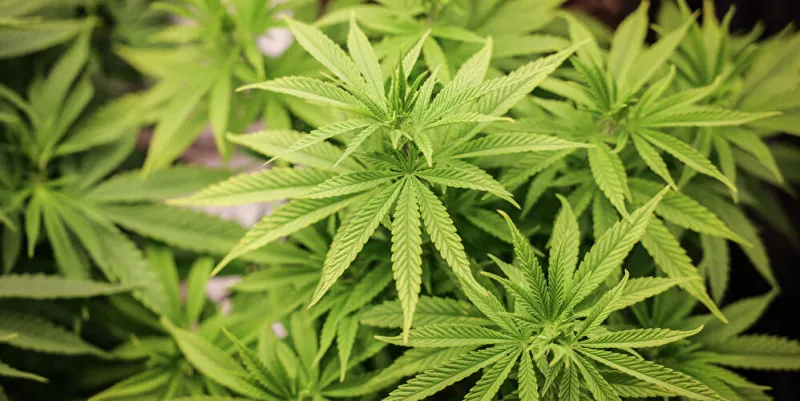
Photo: cannabis terpenes citrus peel lemon oil bottles laboratory tasting notes, via www.berlin.de
There was a time, not so long ago, when buying CBD in Britain involved a shelf, a QR code and a slightly awkward conversation with someone in a branded apron. Now it involves vocabulary. Limonene. Myrcene. Pinene. A knowing nod towards "bright citrus opening" and a "grounded, peppery finish." Somewhere between the health food shop and the wine merchant, the CBD aisle learned to talk like a tasting menu.
It is a genuinely clever bit of repositioning. A bottle of oil that legally cannot promise you much of anything becomes, instead, an experience. Flavour is safe territory. Flavour doesn't need a medicines licence.
First, the actual chemistry
Terpenes are the aromatic compounds that give plants their smell. They're everywhere — citrus peel, pine needles, lavender, black pepper, hops. Cannabis produces a particularly rich spread of them, and in the plant they appear to serve ecological purposes: deterring pests, attracting pollinators, and generally doing the quiet work of survival.
What they do in a bottle of CBD oil is a different question, and one with a far thinner evidence base than the marketing suggests.
The popular claim is the "entourage effect" — the idea that cannabinoids, terpenes and other plant compounds work better together than in isolation. It's an appealing theory. It's also, in human clinical terms, largely unproven. Most of the research sits in petri dishes or animal models, or in studies too small and too loosely designed to settle anything. That doesn't make it wrong. It makes it unfinished.
Here's the practical wrinkle: terpenes are volatile. They evaporate. A bottle that has sat on a shelf in a warm shop since spring may well have a terpene profile on the label that no longer resembles the liquid inside it. And many mainstream CBD products are made from isolate or broad-spectrum extract, where the terpenes have been stripped out entirely and then — sometimes — added back in as a flavouring. Which is fine. But it's a flavouring, not a philosophy.
What the labels are allowed to say
This is where the UK gets interesting, and by interesting I mean restrictive.
CBD sold as a food supplement in Britain sits under novel food rules, administered by the Food Standards Agency. Only products with a validated novel food application are meant to be on shelves at all — a line the market has been slow to respect. On top of that, the Advertising Standards Authority has taken a consistently hard line on anything that reads as a medicinal claim. Anxiety, sleep, pain, inflammation: all effectively off-limits unless you happen to hold a medicines licence, which almost nobody selling a high-street tincture does.
So terpenes arrive as a loophole dressed as connoisseurship. You can't say "this will calm you down," but you can say "linalool-rich, floral, softly herbaceous" and let the customer's imagination do the regulated work for you.
To be fair to the better operators, some of this is legitimate craft. Producers who genuinely care about flavour have every right to describe it, the same way a coffee roaster describes a Kenyan lot. The problem is what's missing alongside it: batch-specific, third-party lab results showing the actual terpene content, not the intended one. A handful of UK brands publish full certificates of analysis with terpene panels. Many publish a cannabinoid count and nothing more. Plenty publish a cheerful illustration of a grapefruit.
How to read a terpene list without being had
A few rules of thumb, learned the hard way by anyone who's spent too long in this market.
Ask for the batch, not the blend. A terpene profile should be tied to a specific production run. If the shop can't tell you which batch the numbers came from, the numbers are decoration.
Distinguish added from inherent. "Naturally occurring terpenes" and "terpenes added for flavour" are two different products. Neither is illegal. Only one is what most people think they're buying.
Be sceptical of strain names. Cannabis strain naming is folklore, not taxonomy. Two growers can both sell you something called Lemon Haze and mean entirely different plants. UK CBD sold as a food supplement isn't even working from the same plant material as the high-THC market, so a strain name borrowed from Amsterdam is essentially a costume.
Treat flavour claims as flavour claims. If the bottle says citrus-forward, expect citrus. Don't quietly upgrade that into a promise about your evening.
Check for the boring stuff. Novel food application status. THC content. Cannabinoid milligrams per dose. A company that's transparent about the unglamorous parts is usually the one whose terpene talk you can trust.
The wine-bar problem
There's something faintly ridiculous about the whole register — the chalkboard fonts, the talk of "finish," the sense that you're being guided through a flight rather than sold a supplement. It borrows the social permission of a wine shop, where spending twenty quid on something you're not sure about feels like culture rather than indulgence.
And look, British drinking culture is genuinely shifting. Sober-curious nights out, the low-and-no boom, the growing suspicion of a hangover. Into that gap steps a product that wants to be poured, discussed and savoured rather than swallowed as a dose. Terpene language is doing a lot of work to make that feel natural.
Which might be fine — as long as the vocabulary doesn't outrun the evidence. Because a customer who buys on citrus notes and gets a pleasant smell has been sold a good experience. A customer who buys on citrus notes and assumes they've bought a targeted effect has been sold a story.
The terpene conversation is worth having. It's just worth having with the lab report on the table, not the tasting card.