Lawful but Not Normal: Why UK Medical Cannabis Patients Are Still Policed by Suspicion
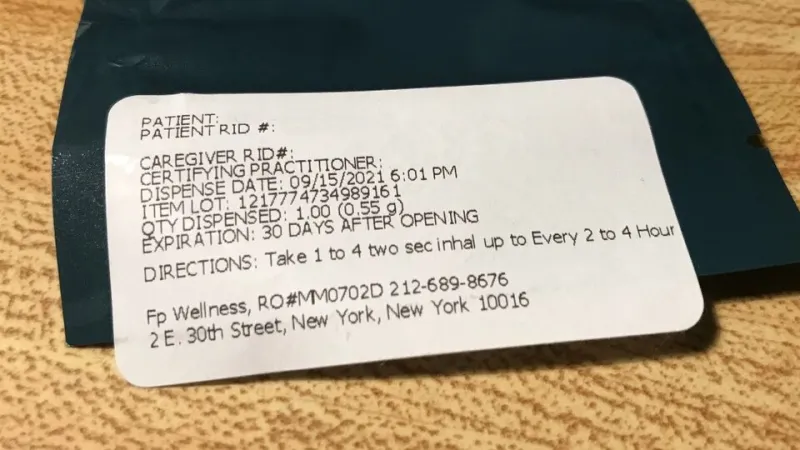
Photo: Spaceboyjosh, CC BY-SA 4.0, via Wikimedia Commons
In 2026, medical cannabis is legal in the UK. It is prescribed by specialist doctors, mostly through private clinics, and dispensed as a controlled drug. The law changed in 2018. The culture around it has not changed nearly enough.
Ask patients and the same phrase comes back in different forms: you are legal until you have to prove it. The prescription is lawful. The suspicion is still routine.
The script is legal. The stop isn’t.
Dan, a 38-year-old from Sheffield, has a private prescription for chronic pain. He carries his clinic letter, the dispensing label and a copy of his prescription in the same bag as his medicine. On a Friday night last year, police stopped him after a report from a member of the public. He showed the paperwork. The officers were polite, but they did not seem to know what they were looking at. They seized the medicine and told him it would be checked. It was returned weeks later.
Maya, in Cardiff, uses prescribed cannabis for PTSD. She disclosed it to her employer before a routine drug test. Occupational health did not have a policy for prescribed cannabis. She was suspended pending a review while managers worked out whether her medicine counted as a safety issue. She kept her job. The process took four months.
These are not stories about recreational users trying it on. They are stories about people with legal prescriptions being processed through systems that have not been designed for them.
What the law says — and what it doesn’t
Cannabis-based medicinal products are Schedule 2 controlled drugs. If you have a valid prescription from a specialist and you possess the medicine in accordance with that prescription, possession is lawful. That is the principle. The reality is more procedural.
There is no statutory patient card that police must accept. Private cards and awareness schemes may help communication, but they are not legal proof. A prescription is evidence, not a passport. A solicitor who advises patients on possession and employment issues told me the law is clear on paper but operational knowledge is patchy. “Some officers understand it,” they said. “Some do not. The patient ends up doing the training at the roadside.”
Police guidance exists, but it is not applied evenly. A lawful medicine can still be seized, tested and returned. That is not necessarily unlawful policing. It is the friction of a criminal-justice system that still sees cannabis first and medicine second.
Travel: domestic patience, international caution
Domestic travel is usually manageable if you are organised. Carry the medicine in its original packaging, with the dispensing label, a clinic letter and a copy of the prescription. Tell security if you are going through an airport and follow the operator’s rules. Do not decant oil into an unmarked bottle.
International travel is a different game. A UK prescription means nothing in many countries, and some treat any cannabis product as a serious offence. Check the embassy, check the airline, check the destination’s rules, and do not assume a UK clinic letter will get you out of trouble. Travel insurance may also exclude prescribed cannabis, so read the small print before you fly.
Work: the drug test problem
Workplace drug tests detect THC metabolites, not impairment. A prescribed patient can test positive for days or weeks after legitimate use. That creates an obvious problem for safety-critical roles and for employers who have never thought about the difference between a prescription and a positive result.
Some patients are protected under disability discrimination law if their condition qualifies. Reasonable adjustments may be possible. But it is not automatic, and it is not something most patients know how to negotiate. Disclose to occupational health where possible, ask for the policy in writing, and get advice if you are facing a disciplinary process. Insurance is similarly patchy: life cover, travel cover and home cover can all ask questions that patients are not prepared for.
Why the suspicion sticks
Part of this is history. Cannabis spent decades as a symbol of criminality, and that imagery does not disappear because a private clinic issues a PDF. Part of it is class and access: private prescriptions cost money, and the system looks to some like a legal workaround for people who can afford it. Part of it is simply that the everyday infrastructure — policing, HR, insurance, travel — has not been updated.
The result is a strange double life. Patients are lawful at the pharmacy counter and suspect at the train station. They are compliant in the clinic and a “case” at work. A medicine that smells like cannabis still carries the scent of the criminal justice system.
What campaigners want next
Campaigners are not asking for a free-for-all. They are asking for the legal system to match the law. That means mandatory police training and clearer national operational guidance. It means a verification system that officers and employers can trust, ideally backed by the NHS rather than private cards. It means employment guidance that distinguishes prescribed medicine from unauthorised use. It means insurance products that do not treat patients as underwriter bait.
It also means better NHS access, so medical cannabis is not a postcode lottery decided by ability to pay. And it means travel guidance from government and transport operators that is easy to find before a patient is standing at a departure gate.
None of that is radical. It is the admin of legalisation. Until it happens, patients will keep doing the work: carrying letters, explaining themselves, and hoping the next person with a uniform or a policy document has been trained. The law has moved. The suspicion has not. That is the purgatory.