Same CBD, Different Map: Britain’s Cannabis Wellness Postcode Divide
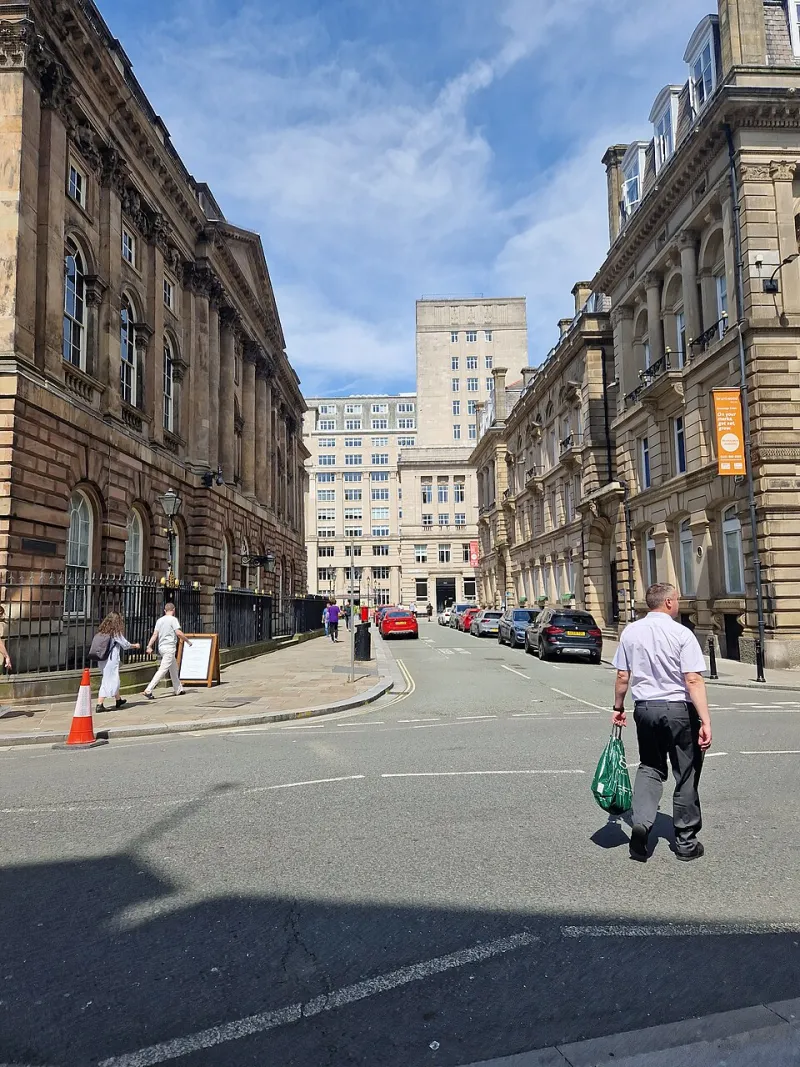
Photo: Frombowen, CC BY-SA 4.0, via Wikimedia Commons
The UK cannabis wellness map is not drawn with one pen. Try a simple exercise: search for a CBD shop near you from a flat in Leeds, a village in Powys and a suburb of Belfast. The results tell a story about rent, regulation, health services and the quiet luck of geography. As of November 2026, cannabis wellness is still a postcode business.
The high street is not a level playing field
Walk through central Bristol, Leeds or Manchester and CBD is visible: shop windows, refill bars, gummies, oils, balms, drinks. In a rural market town, the offer shrinks to a health food shop shelf, a pharmacy behind the counter, or nothing at all. Online fills gaps, but delivery, age checks and returns are not the same as asking a human a question.
High-street access is shaped by rent, footfall, local demographics and planning. CBD shops cluster where there is enough passing trade. That means cities and university towns win. Market towns get a chemist and a vape shop. Villages get the postal service.
The clinic map is even patchier
Medical cannabis is legal on prescription in the UK, but access is not evenly distributed. NHS prescribing remains narrow; most patients who get a legal prescription do so through private clinics. Those clinics cluster in London, Birmingham, Manchester and a few other urban centres, though many now run video appointments.
A video call sounds geography-blind. It is not. You need a stable connection, a private space, ID, a GP record and a payment card. You may need to travel for a follow-up, a pharmacy query or a specialist review. In rural areas, the nearest clinic may be a train and a taxi away. In Northern Ireland, Scotland and Wales, the health system is devolved, so NHS pathways and local commissioning differ even though drug law is UK-wide.
What the data can and cannot show
There is no single public register of every CBD shop or private cannabis clinic, so any map is partial. The Food Standards Agency’s novel food list is a useful starting point for products, but it is not a shop locator. Clinic directories are commercial. Local authority licensing data is patchy. That means the postcode penalty is often invisible in official statistics but obvious to anyone who has tried to buy or prescribe.
Three postcodes, three experiences
Take three recognisable postcodes. In a dense London borough, CBD is a ten-minute walk and a private clinic is a Tube ride. In a village in mid-Wales, the nearest CBD oil might be 30 miles away, and the clinic is a video call with a pharmacy courier. In a town in Northern Ireland, the high street may have a health shop, but medical cannabis patients can face extra travel and cross-border confusion. Same country, different options.
The devolved nations add another layer
Drug law is reserved to Westminster, but health is devolved. That creates a layered map: the same prescription rules, different NHS pressures; the same CBD food rules, different local trading standards priorities; the same online shops, different delivery times. For consumers, the practical result is that “UK legal” does not mean “equally available”.
Why this matters for a countercultural market going mainstream
Cannabis wellness is trying to go mainstream. Mainstream markets are supposed to be convenient, consistent and accountable. A postcode lottery undermines all three. If a patient in a city can walk into a clinic and a patient in a village cannot, the legal market looks like a privilege. If a CBD shopper can only find products online, they are more likely to rely on unregulated sellers or guesswork.
That is not an argument for a free-for-all. It is an argument for better maps, clearer signposting and consumer advice that works outside Zone 1.
Consumer advice for a postcode-poor postcode
Check the clinic, not the influencer. Look for a regulated healthcare provider, a named specialist and a pharmacy registered with the General Pharmaceutical Council. Ask how repeat prescriptions work and what happens if you move. For CBD, check the batch code, certificate of analysis and novel food status. Buy from a retailer that can answer basic questions about THC content and lab testing.
If you are in a rural area, plan for delivery. Ask about courier age verification, returns and heat-sensitive packaging. Do not assume a shop assistant is a clinician. And if you are seeking medical cannabis, start with your GP record and be honest about your current medication.
The bottom line
The postcode penalty is not a glitch in the UK cannabis map. It is the map. Until access, information and regulation are designed for the whole country, cannabis wellness will keep looking like a city privilege with a rural postal address.